Jan 25 2013

Back amongst the biographies

Rosemary

I really must catch up on some serious writing!

I lost a certain amount of time in the run-up to Arisia, and at Arisia, and now some extra post-Arisia biz. It was decided that we judges should provide the contest winners with some actual feedback, so I was up late last night attempting to manifest sagacity, gentility, laser-like analytical brilliance, and kind-heartedness simultaneously. I don’t know if I managed all that, but I did enjoy the process. Plus: I’m smarter at night, and I miss being up in the small hours to witness my own smartitude. Alas, the DayJob forces me to be conscious in the morning, at the sacrifice of the deeps of the night.

I did manage to write a bit at the convention:
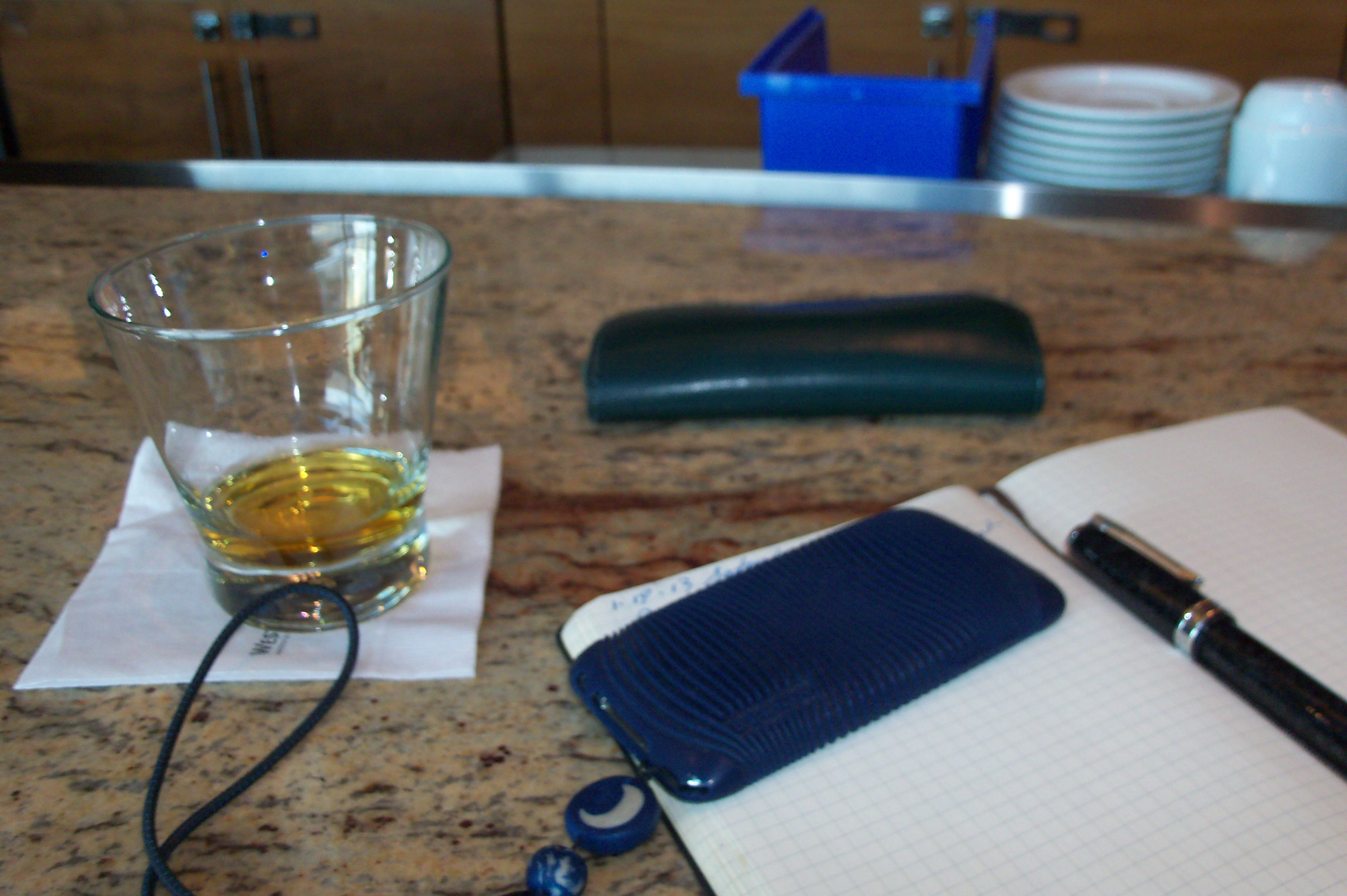
12-year-old Oban?   14-year-old Oban?   I forget.  Good, though.

A little single-malt to lubricate the gears.


And of course, hanging with pals is half the point of a convention:
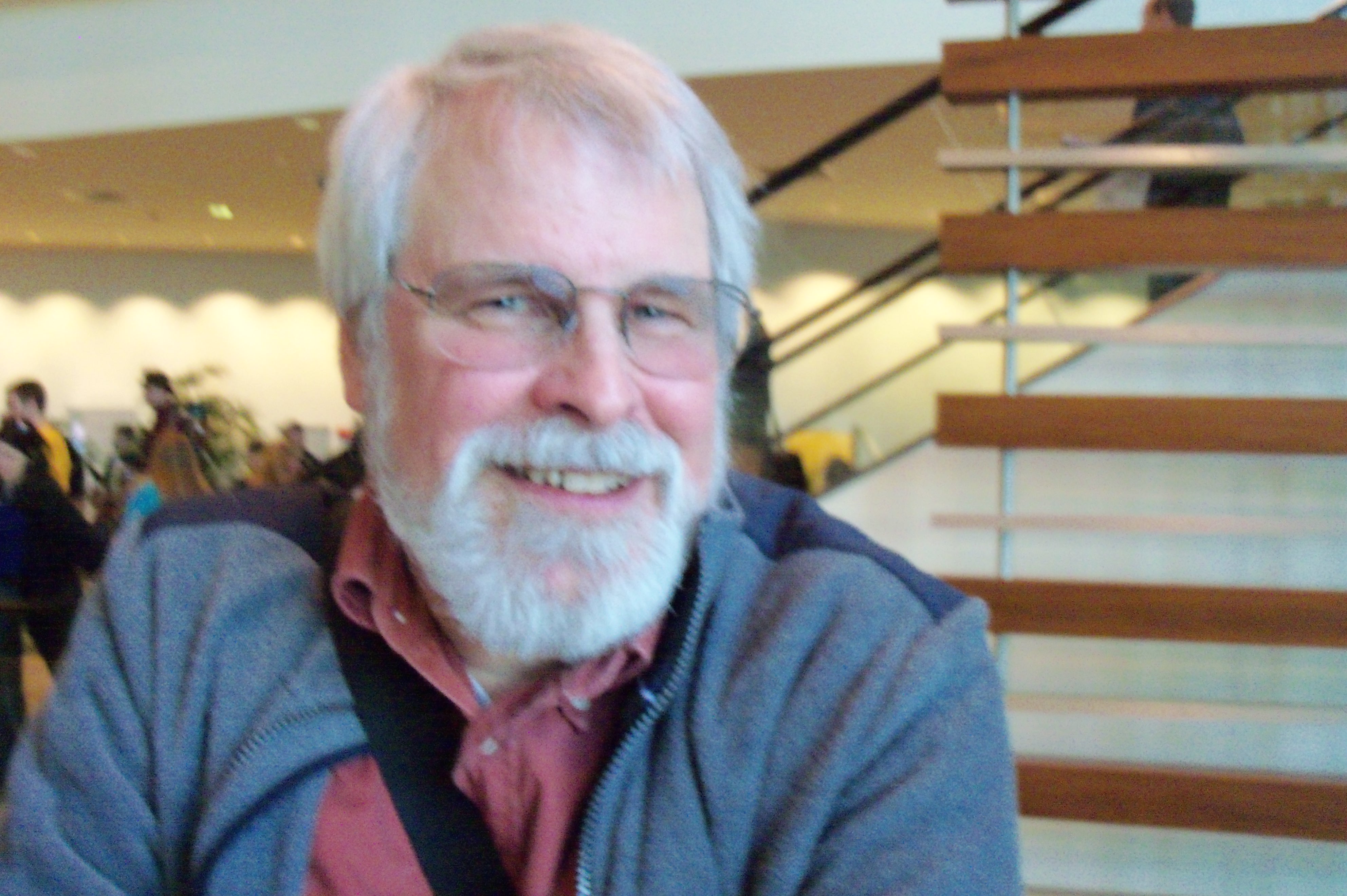
 

This guy is everywhere.   Everywhere, I tell you!

The famous Jeff Carver of famed Jeff-Carverdom.


Yeah, here’s his website.   And this is his blog.  Check out his books!

Yikes.   I’ve spent too much time blogging, and not enough actually writing.   Gotta go —

But first, your obligatory random quote:

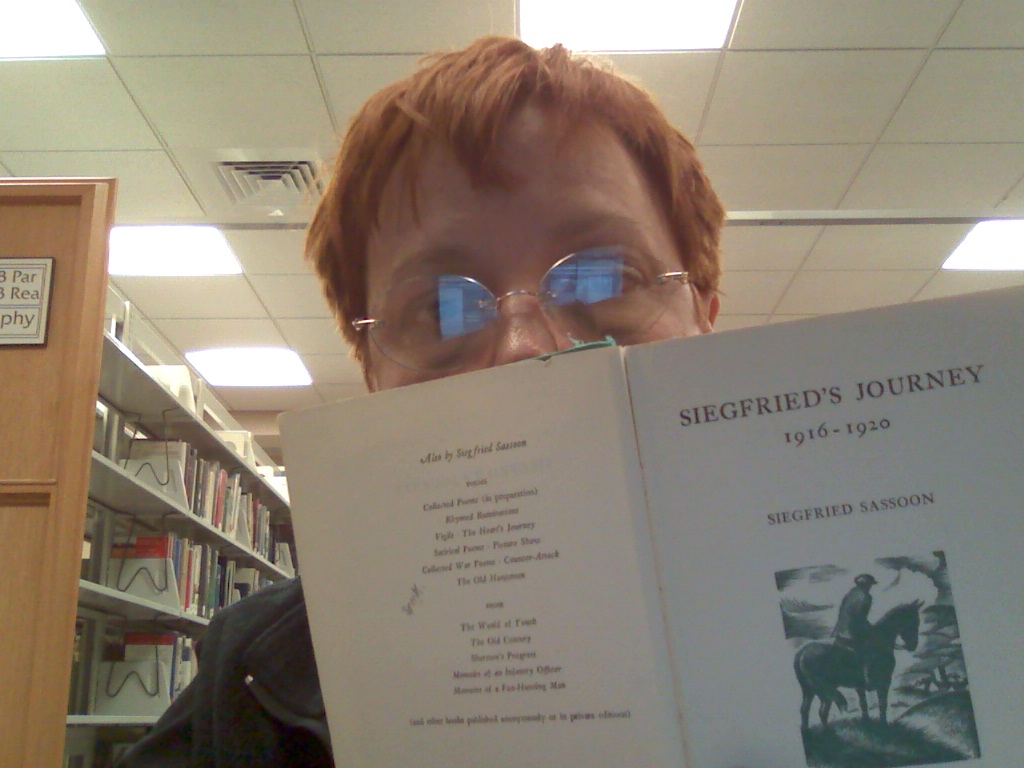
“It now seems odd and almost incredible that while in [T.E.] Lawrence’s company, I should have said nothing about Thomas Hardy.  How, I wonder, did I get through the evening without it somehow transpiring that I was on the eve of an inaugural visit to Max Gate?  How, on the other hand, could I have guessed that Lawrence honored him — as I did — beyond any other living writer (although it was not until 1923 that he became, probably, the most admired and valued friend of Hardy’s last years)?  My own association with Max Gate had begun early in 1917, when I wrote to ask Hardy to accept the dedication of The Old Huntsman.  In doing this, I had been encouraged by my uncle Hamo Thornycroft’s having known him for many years, and by the fact that Mr. Gosse had assured me that the request would give pleasure to ‘True Thomas,’ as he called him.”    

Sigfried’s Journey 1916-1920, by Sigfreid Sassoon, Viking Press, 1946

I’m sorry.   When Hamo Thornycroft’s name came up, I could not stop laughing.   Forgive me.
 

Everyone suddenly burst out singing; And I was filled with such delight As prisoned birds must find in freedom, Winging wildly across the white Orchards and dark-green fields; on--on--and out of sight.  Everyone's voice was suddenly lifted; And beauty came like the setting sun: My heart was shaken with tears; and horror Drifted away ... O, but Everyone Was a bird; and the song was wordless; the singing will never be done.

Famed in his time, which was a time of war.


Jan 22 2013

And now for our daily affirmation…

Rosemary


Jan 14 2013

Doing my bit for the future SF authors of America

Rosemary

Did I mention I’m going to Arisia?

Took me by surprise, too, as I hadn’t originally planned to.    But I was asked to serve as one of the judges in Arisia’s student writing contest, and voila!  Now I’m going.

So I have my head buried in these manuscripts, trying to rank them.   I’m almost done.   There aren’t that many, so it’s not too onerous, but it is an interesting exercise, all around.

I am much encouraged that these young writers are out there, dreaming their dreams and daring to write them down…


Jan 12 2013

Because reasons!

Rosemary

In my friend Ann Zeddies’ blog,  she refers to something that happened “…For what my father’s elderly German friend used to describe as ‘too many circumstances.’ I think this was the pre-internet version of ‘because reasons!'”

I found myself reminded that I do enjoy  the phrase “Because reasons!” when it appears.  It must do so appropriately, of course.

The reasons must be either:

  1. too many to enumerate; or
  2. so glaringly obvious that  in our fast-paced 21st century, it simply isn’t worth stopping the fascinating futuristic things we’re doing  to write down something that everybody who’s anybody already knows; or
  3. none of your beeswax


Meanwhile:

Science fiction authors doing whimsical things to help one of their own!   Can your money be better spent?

Jay Lake is fighting cancer, and the SF/F world is rallying to help with the expenses (specifically in his case: gene sequencing).   Certain SF/F authors have been recruited to perform peculiar, or embarrassing, or perplexing acts, for money.   The money is for Jay Lake‘s expenses; the acts are for our amusement.  The list itself is worth the price of admission.

I just went over there myself and gave them some money because reasons!   (1, and 2, above, not 3.)

There was an option to include a little note with your donation.   After much soul-searching and agonizing, this is what I sent:


“I like whimsy.  I hate cancer.  Here’s my money.”


I feel that pretty much covers it.


Jan 4 2013

And a happy new year to all.

Rosemary


Alas, holidays are over.   Okay, everyone,  back to work.   Seriously.

I’m again at my library, finding that my favorite carrel by the great big windows is exceptionally COLD.   Less that two feet away, it’s 23 degrees fahrenheit out there (-5 Celsius, for you Europeans).

What this place needs is a fireplace to sit beside.   Yeah.  And a cat!

I’d bundle up, but bundling up does rather immobilize one.  And I’m already stiff and achy from sitting immobile all day at the DayJob.

Yes, I still have the DayJob!  Plans are afoot —  but for the time being, yes, still there, grumble grumble…

I’ve  just finished reading John Haines’ book The Stars, The Snow, The Fire, which I discovered when I pulled it off the shelf for a random quote last month.

I found it fascinating, in  so many ways — I love wilderness, and solitude, and deep thought, and any place that has clear open skies above, and the book does have all of that.   And Haines was a poet, so his memoir is often poetic, but always clear and immediate.

I find I like him least when he is being intentionally philosophical, and best when he lets the landscape,  events and characters  speak for themselves.   If you present something clearly enough, the implications will communicate themselves, and you needn’t channel the reader toward some specific conclusion.    And more often than not, that’s how Haines manages his essays; I think he’s especially brilliant at it.

But one thing I found particularly interesting, and unexpected,  was the near-total absence of women.

Now, I do not complain about this.   I bring it up merely as an aside.  It’s a simple fact of the time and place about which Haines was writing.   But I felt as though I were being given a window into a world not otherwise open to me.

A world of hunting, trapping, building cabins by hand.   Hunkering down for the winter, waiting for the sun to return.   Listening for the ice to break.   Trekking miles down the mountainside for an evening’s visit to the nearest roadhouse, there to listen to the laconic conversation of the most grizzled of old-timers…

Certainly a woman can do all that, and almost certainly they are doing it — now.   But the time covered by Haines’ memoir is from the late 1940’s to the late 60’s.  For the most part, these men saw only other men, for months on end — that is, when they saw another human being at all.

But I believe: bring a woman into the picture, and the men would have acted differently; stories would have unfolded in a different way; and the whole social dynamic would have altered.

In fact, I get the sense that  the solitude itself would have been a different solitude, if this world had been shared by an equal number of women.

Of course… perhaps it was.    Haines mentions women only glancingly — but is that because (as seems to have been comunicated to me) they were mostly absent?    Or did the author, a product of his times, consider them and their stories irrelevant?

I don’t know.   I  can’t tell from the book.

But again, I’m not complaining about the absence of women;  but it does render this an alien landscape, which I cannot help but find fascinating.

Well.  No random quote today, as I’ve spent my blogtime talking about John Haines.

I really, deeply enjoyed this book.


When it's cold, you can see the stars better.


Dec 29 2012

Six hours later….

Rosemary
Plus: turkey was delicious

A good time to be warm and cozy inside is when it’s doing this outside.


Dec 29 2012

As we hunker down

Rosemary

Yes, the storm is upon us, having swept across the country and finally made it to the East Coast.

Genrette Laurie J. Marks is visiting.

and sometimes tape.   Shhh....

Recalcitrant origami box requires clothes pins during intermediate stage.

We took a lovely little walk down the main street of the quaint CT town I live in.   Well, quaint in the town center.  Basically strip-malls elsewhere.

And then it snowed on us!    Coffee at the local cafe,  and conversation about writers and writing followed.

Back home, and watching the snow, checking the weather online, etc.

so far

Not too bad…


Plus: making a turkey.  Just because.   99 cents a pound at the post xmas sales, it would be dumb not to.   Seriously.


Dec 24 2012

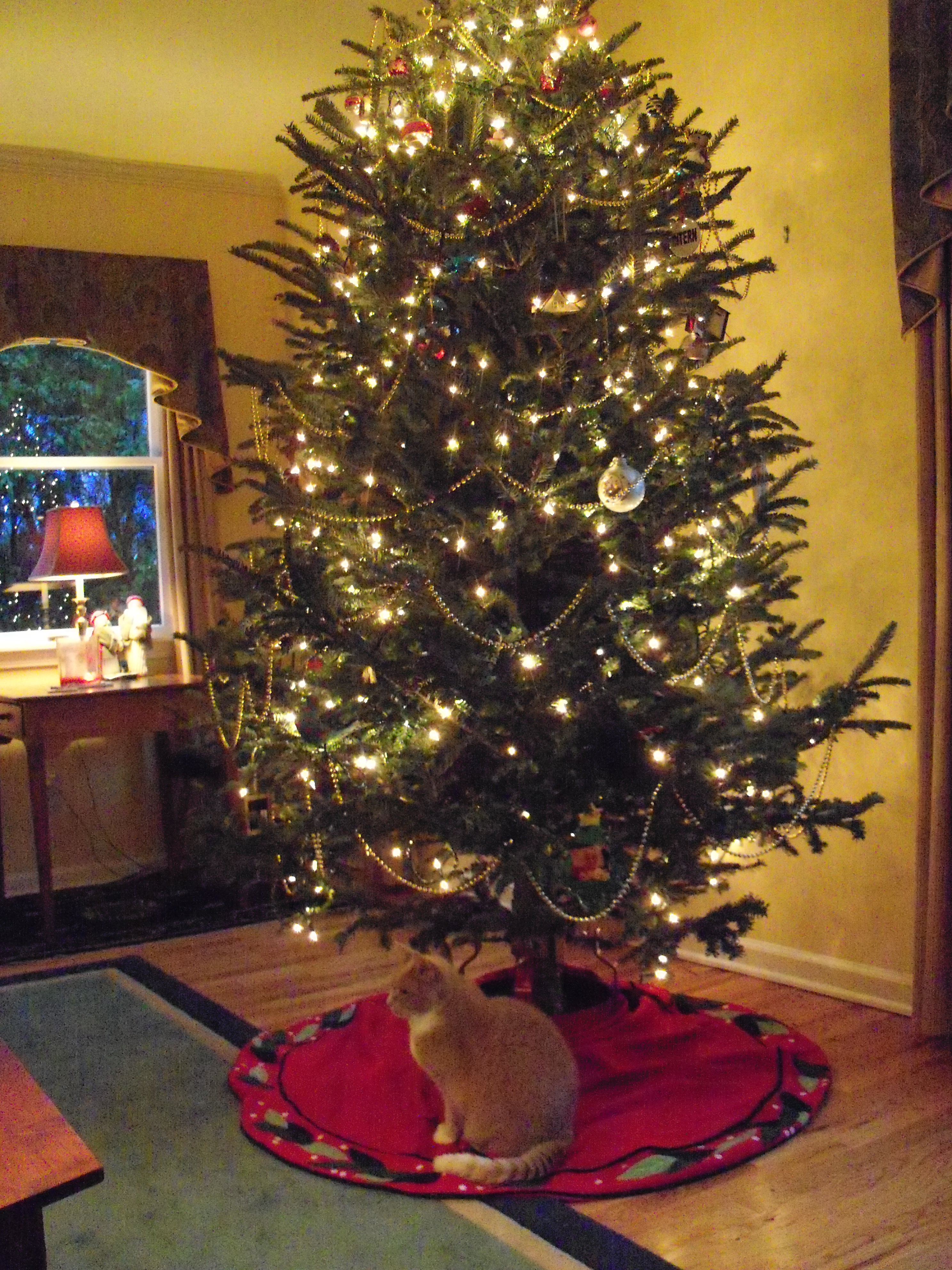
real tree, artificial critters

Rosemary

Hope your holidays joyful and jolly, and warm and cozy.

What do you get your moose for xmas?

left to right: PInga the wolf; Toulouse LauMoose, Catalina Javelina


We are glad of our family, and of our pals (real and imaginary).

And of the chance to visit them –  and their excellent trees.

Friends with BIG house, BIG tree!  Plus: cat.

Cat is not present. That is, cat is present, but not a present.

And my best to all — especially my delightful, brilliant and amazing sister!


Dec 21 2012

when you’re at work and you’ve heard too much Xmas music…

Rosemary

Go to Pandora.com

Create a new station.

For an artist seed, enter “ARROGANT WORMS”.

Listen. Smile.

If the song “Jesus’ Brother Bob” comes on, CRANK IT UP.


Dec 15 2012

A few words about Newtown

Rosemary

I just wanted to say a few words of reassurance to my friends and readers of my blog:

First:  I live nowhere near Newtown.    No relatives of mine live there.   No members of my family were directly touched by these terrible events.   And as far as I know, no one connected with me in any way had any connection to the victims, or the victim’s families.   So, those of you around the world who read this blog, and who heard that it happened in Connecticut, and know that I live in Connecticut — be assured that I and my family, and my friends, are untouched, and safe.

That said, of course I’m affected, emotionally.   These events are horrible beyond understanding.

Writers think a lot about how people work; and what goes on in their heads; and how they make decisions; and how personality plays out against the backdrop of the world, and within the context of society.  We think about these things so that we can create imaginary versions that seem real, engage our readers, and drive our stories.

In past discussions with other writers, the question of portraying evil comes up on occasion.   And far too often, I hear my fellow writers saying that no one does something knowing that it’s evil — that people who do acts that others call evil actually think that what they’re doing is, in some way, good.

My response to that is always: Usually, yes. Always? No. There really are some people who undertake evil acts in order to undertake evil acts.

And argument on the subject follows, naturally. We’re writers, it’s all very abstract, we’re discussing our craft. And the reason my colleagues most often give comes down to: It’s simply incomprehensible. No sane person could do something intentionally for no other reason that to cause pain, misery, to destroy. No one would do a moral wrong on purpose — they must somehow be misinterpreting it as a moral good.

And my response is still: Usually? Yes. Always? No. The above might explain Adolf Hitler; it can’t explain Newtown, Connecticut.

There are people who undertake evil for the sheer, chemical thrill it gives them; or for the sense of power; or for fame — the whole world is suddenly talking about them. For a person otherwise powerless, these things are very attractive.

And I’m sure that there are other possible triggers to evil acts — ones that I can’t yet identify, because I can’t wrap my brain around them.

And that’s why intentional evil is usually badly portrayed in fiction. Because we can’t really wrap our brains around it. In fiction, the bad writers have cardboard “evil” villains, and the good writers have complex “villains” who are convinced they’re on the side of the angels. Or EVIL gets reified as some supernatural being or a force that possesses an otherwise moral person.

See that? See me get all abstract and analytical, there? See me safely distance myself, so that the truth of this dreadful, horrific massacre can rendered manageable and pushed into the background? That’s me being human.

But I know, I am convinced, that out here in the real world there are people who do evil, knowing they do evil, in order to do evil.

And I hope that the shooter in this case is not one of those people — because I want those people to be few, and far between, and almost never encountered. I want them to be vanishingly rare.